The digital world is changing. So are our courses.
An interview with Marie Breuil, founder of Logiscool Spain, about the evolution of our 2026-27 courses.
1. Logiscool started by teaching coding through video game creation. What is changing now?
2. Why have you decided to evolve the courses now?
3. What will families find in the new 2026-27 courses?
4. Does this mean coding is no longer at the centre of Logiscool?
5. Beyond coding, what digital skills do students develop?
6. Many families worry about screen time. How does Logiscool approach this?
7. What makes Logiscool different from other technology, coding or robotics courses for children?
8. What would you like a child to take away from their experience at Logiscool?
9. If you had to summarise this evolution for families in one idea, what would it be?
Technology is part of children’s and teenagers’ everyday lives. They use devices, apps, video games and, increasingly, artificial intelligence tools.
But knowing how to use technology does not necessarily mean understanding how the digital world works.
That is why Logiscool continues to evolve its courses.
From the 2026-27 school year, we will integrate new areas of Digital Intelligence to help students develop broader digital skills, while keeping coding at the heart of the learning experience. Students will learn through practical, creative and collaborative projects.
We spoke with Marie Breuil, founder of Logiscool Spain, to understand what is changing, why now, and what families can expect from this new stage.
1. Logiscool started by teaching coding through video game creation. What is changing now?
Our mission is not changing: we continue to prepare children and teenagers for the digital world.
From the beginning, Logiscool has used coding and video game creation as a powerful way to learn. When a child creates their own game, they also develop logic, creativity, problem-solving skills and perseverance.
What is changing now is that we are expanding that experience.
In fact, at Logiscool we already offer Digital Discovery courses for children aged 6 to 8, where students explore the digital world in a practical, creative and age-appropriate way. Now, we want to bring that same philosophy to students who begin their learning journey with us between the ages of 9 and 12.
We will continue to teach coding, but as part of a broader digital culture: artificial intelligence, digital creation, digital citizenship, cybersecurity, robotics and collaborative projects.
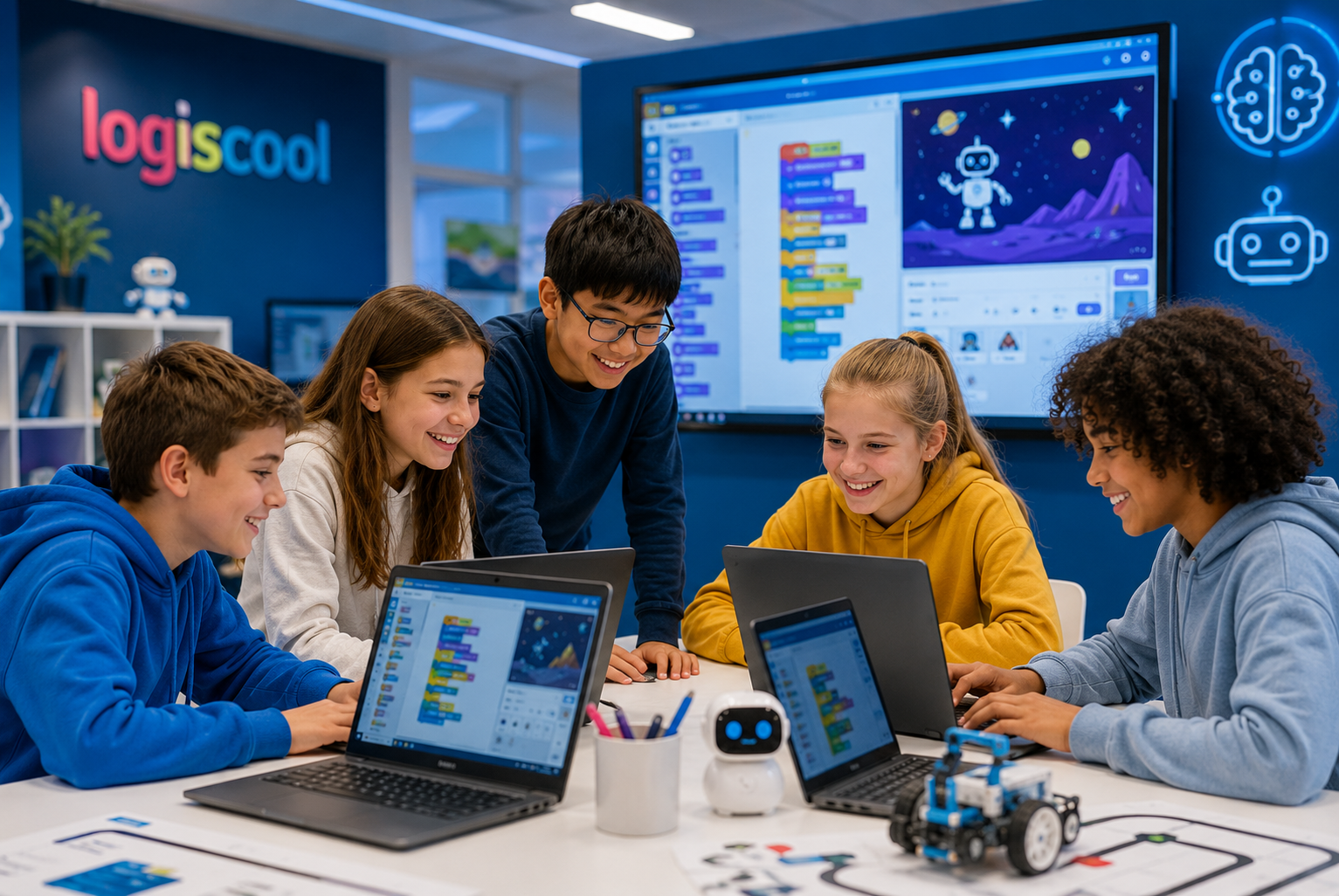
2. Why have you decided to evolve the courses now?
Because technology is changing very quickly.
Artificial intelligence, automation and new digital tools are transforming the way we learn, work, create and communicate.
That is why we believe children need more than the ability to use technology. They need to understand it, create with it and use it thoughtfully.
For many families, screen time is a real concern. And we understand that. But at Logiscool, the goal is not to consume more technology. It is to learn how to use it better.
Watching content passively is not the same as creating a video game, designing a digital project, solving a challenge or reflecting on online safety.
3. What will families find in the new 2026-27 courses?
Families will find a more complete, practical and up-to-date learning experience.
This evolution focuses especially on students who start their journey with us between the ages of 9 and 12. For them, we want to offer a broader entry point into the digital world, just as we already do with younger children through our Digital Discovery courses.
The goal is not to replace coding, but to connect it with other digital skills that children need today.
The new content is organised into four main areas:
1. Coding and logic
Algorithmic thinking, problem solving, computational logic and collaborative projects.
2. AI and digital literacy
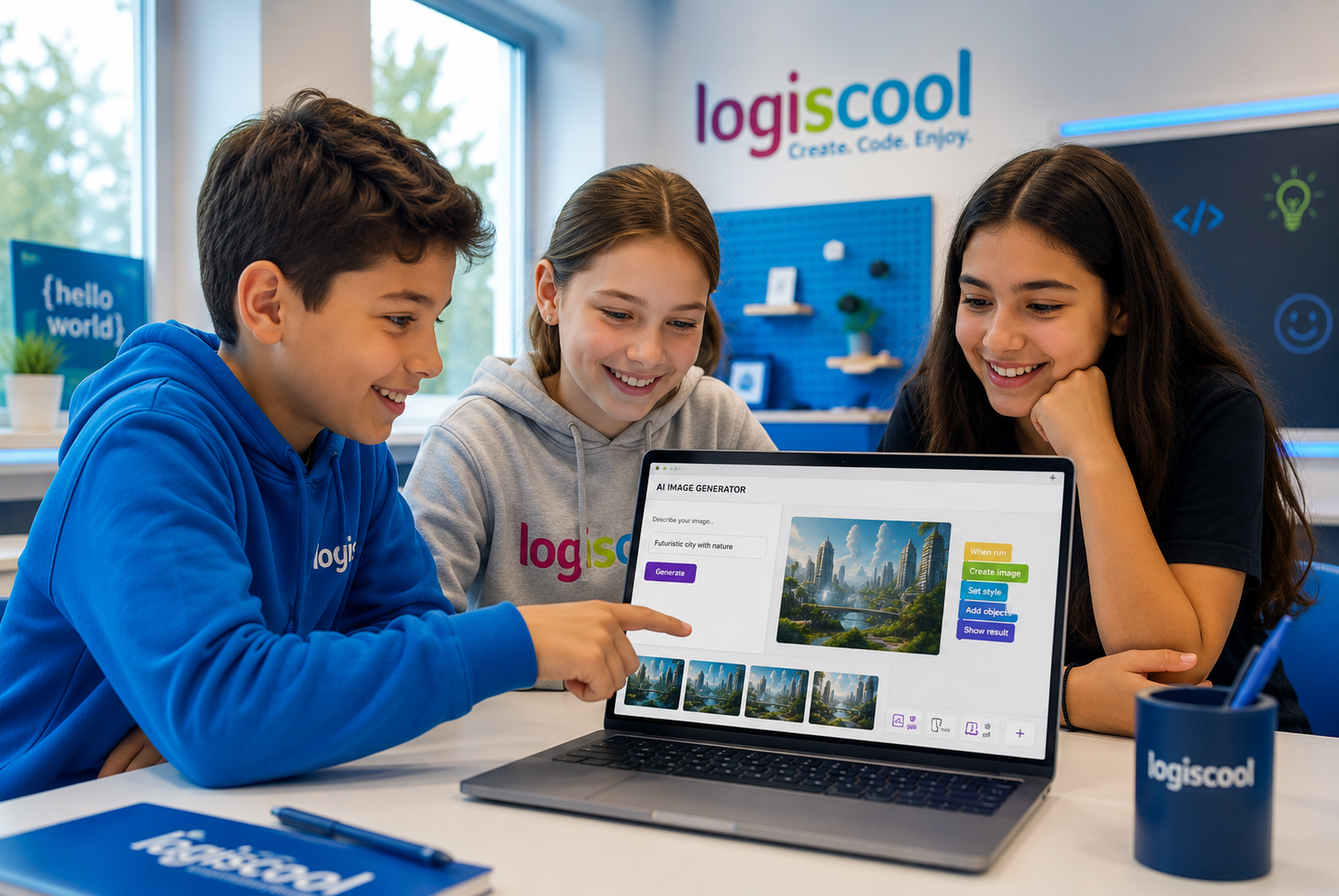
Responsible use of digital tools, prompt engineering, AI ethics and a basic understanding of how artificial intelligence systems work.
3. Digital creation
Digital illustration, 3D modelling, video production, digital storytelling and digital design.
4. Digital citizenship
Cybersecurity, privacy, responsible information use, digital ethics and safe use of technology.
All these areas will be explored through practical and collaborative projects, so students do not just learn concepts: they apply them by creating.
4. Does this mean coding is no longer at the centre of Logiscool?
No. Coding remains a fundamental part of Logiscool.
What changes is that we now connect coding with other digital areas that are already part of today’s world. A student can learn logic by programming a game, but also apply that way of thinking to understand an artificial intelligence tool, create digital content, solve a robotics challenge or reflect on online safety.
Coding remains the foundation. The experience is now broader.
5. Beyond coding, what digital skills do students develop?
They develop skills that are useful both inside and outside the world of technology.
They learn to think logically, solve problems, organise ideas, create projects, collaborate with others and communicate what they have built.
They also learn to use digital tools with more confidence, awareness and responsibility.
Our goal is not for every student to become a programmer. We want them to gain confidence and discover that they can move from being digital consumers to digital creators.
This evolution also allows us to connect with many different student profiles: children who love video games, creativity, design, technology, challenges or simply discovering new things.
6. Many families worry about screen time. How does Logiscool approach this?
We completely understand this concern.
The difference lies in the type of use. At Logiscool, the screen is a tool, not the objective.
Students do not come to passively consume content. They come to create, think, test, make mistakes, correct them and build projects. They also work with classmates, share ideas and learn to present what they have created.
The goal is to help them develop a more active, conscious and responsible relationship with technology.
7. What makes Logiscool different from other technology, coding or robotics courses for children?
The main difference is that Logiscool does not approach technology as a one-off activity, but as a structured and progressive educational journey.
There are interesting coding courses, and there are also many robotics activities, especially in schools. Robotics can be a very valuable way to apply coding and logical thinking, but it is only one of the many ways children can create with technology.
At Logiscool, students discover a broader vision: coding, video game creation, artificial intelligence, digital creation, cybersecurity, digital citizenship, robotics and collaborative projects.
We also have our own methodology, a certified educational platform and a learning pathway that supports students step by step.
This structure does not come from a short-term trend. Logiscool was founded in 2014 and is now present in more than 30 countries. This international experience allows us to observe how digital education is evolving, continuously update our content and adapt it to students’ real needs. In Spain, where we have been present since 2022, we apply this global methodology with a close understanding of local families and schools.
For students who reach more advanced levels, the learning journey can continue with coding, video game development, artificial intelligence, data science, web development or Python, including preparation for certifications such as Python PCEP.
8. What would you like a child to take away from their experience at Logiscool?
I would like them to leave with a different relationship with technology.
Not just as consumers, but as creators. I want them to discover that they can have an idea and turn it into a real project. That they can gain confidence, creativity, logical thinking and problem-solving skills.
And, above all, that they understand technology is not only something we use. It is also something we can create, question and improve.
9. If you had to summarise this evolution for families in one idea, what would it be?
We still teach coding, but we now help children develop a much broader digital culture.
We want them to understand technology, create with it and be prepared to make the most of future opportunities.
This evolution better reflects the world children are living in today, and the one they will find tomorrow.
Find out more about Logiscool courses for 2026-27
Each Logiscool centre can provide information about available courses, ages, schedules and content for the next school year.


